Chuck Chuck Baby – Review

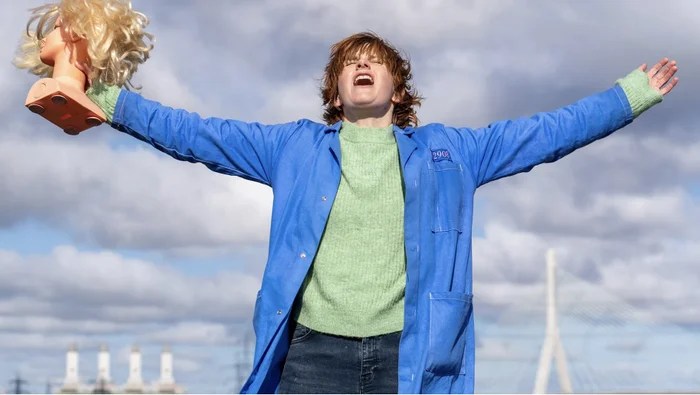
Chuck Chuck Baby is a tender, offbeat gem of a film that blends the grit of working-class life with the sparkling charm of a jukebox musical, delivering a heartfelt coming-of-age story about starting over—particularly from the queer, female perspective.

At its core is Helen, played with aching vulnerability and quiet strength by Louise Brealey. Her journey of self-discovery and reconnection is both specific and universal, deeply rooted in the common queer experience of having to rebuild and rediscover oneself later in life. The arrival of her old flame, Joanne (a magnetic performance by Annabel Scholey), acts as a catalyst, unlocking memories, regrets, and new hope. Their chemistry crackles—playful, intimate, and electric without ever feeling forced. Watching them together is a genuine joy.

What makes Chuck Chuck Baby stand out isn’t just its heartfelt narrative but the way it dares to contrast its bleak, industrial setting with moments of unfiltered whimsy. Set against the grey backdrop of a chicken factory, the film sprinkles in delightfully kooky musical numbers. It’s a melting pot of the weird and the utterly mundane and that tonal contradiction reflects Helen’s emotional landscape as she stumbles toward rediscovery.

The wider ensemble of factory workers forms an unlikely but deeply affecting surrogate family. Their camaraderie, bickering, and quiet acts of care become the beating heart of the film. It’s through them that Chuck Chuck Baby reveals its central message: that love, in all its forms, is what gives life colour.

Musically, this is a jukebox musical like nothing I’ve ever seen. The opening number immediately brought to mind the iconic “Wild World” scene from Skins—unpredictable, raw, and beautifully staged. But it was Helen losing herself to Neil Diamond’s “I Am… I Said” that absolutely floored me. It’s one of those rare cinematic moments that’s simultaneously hilarious and heartbreaking.

I laughed out loud. I cried. And really, what more can you ask for than that?

Wednesday – Review

Snap, Snap – The Addams Family Goes Gothic YA

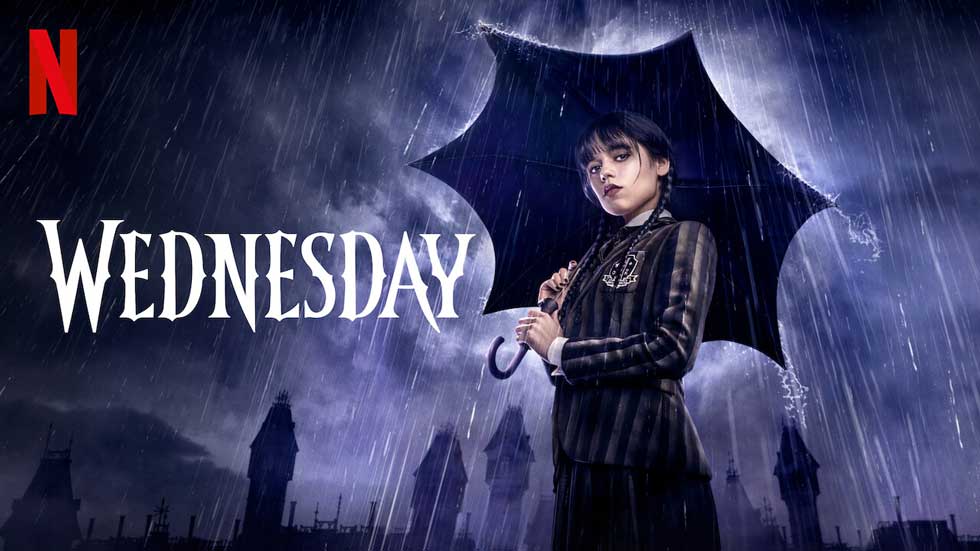
Everybody’s favourite spooky family gets the Tim Burton treatment in Wednesday, Netflix’s sleek, gothic teen mystery set in a school for supernatural misfits. And honestly? I didn’t hate it.

While Burton may have softened since his Nightmare Before Christmas and Edward Scissorhands heyday, his stylistic fingerprints are all over this show—from the towering architecture of Nevermore Academy (shot in Romania, a perfect gothic backdrop) to the pale complexions, looming shadows, and deadpan one-liners. It’s creepy, kooky, mysterious, and spooky… mostly.

The real triumph here is Jenna Ortega’s Wednesday. She’s insufferably miserable in all the right ways—stone-faced, sharp-tongued, and oddly magnetic. Ortega doesn’t just imitate the character, she inhabits her with a fresh confidence, balancing the iconic bleakness with enough vulnerability to make her evolution feel earned. Watching her butt up against cheerful werewolf roommate Enid, overbearing adults, and awkward teenage suitors is a highlight. These collisions force Wednesday to (grudgingly) grow, and it’s deeply satisfying to watch.

That said, some of the original Addams charm is lost in translation. The show suffers from a noticeable lack of Gomez and Morticia, whose romantic, macabre energy gave the earlier versions of the family their heart. Luis Guzmán and Catherine Zeta-Jones do what they can, but they’re sidelined in favor of a Hogwarts-meets-Riverdale teen plot that, while entertaining, feels slightly overstuffed. The ancestral haunting subplot had the bones of something brilliant—it felt thematically in step with the Addams’ legacy—but the show’s insistence on playing it overly straight zaps some of the fun. A touch more self-awareness or camp might have balanced the tone better.

Still, the supporting cast shines. Emma Myers’ Enid is an absolute delight, balancing bubbly optimism with genuine emotional depth. Gwendoline Christie’s Principal Weems commands every scene with elegance and menace, and Hunter Doohan as Tyler does a commendable job walking the line between charm and deception. Then there’s Christina Ricci—returning to the Addams universe not as Wednesday, but as a teacher with secrets of her own. Her performance is both nostalgic and shrewd. Yes, her villainy is clearer on rewatch, but Ricci’s natural likability keeps you guessing, making the eventual reveal genuinely effective.

Visually, the show is gorgeous. The Romanian setting gives the show a real sense of place—misty forests, looming buildings, and dark corners that feel like they were pulled from a gothic fairytale. It’s the perfect frame for Wednesday’s grim worldview.

In the end, Wednesday is a stylish, slightly uneven, but thoroughly watchable reimagining of a classic. It’s less a love letter to the Addams Family and more of a spin-off that dabbles in the macabre while firmly planting itself in the YA genre. If Burton’s edge has dulled, Ortega sharpens it again with a performance that’s as cold and cutting as it is compelling.

Rivals – Review

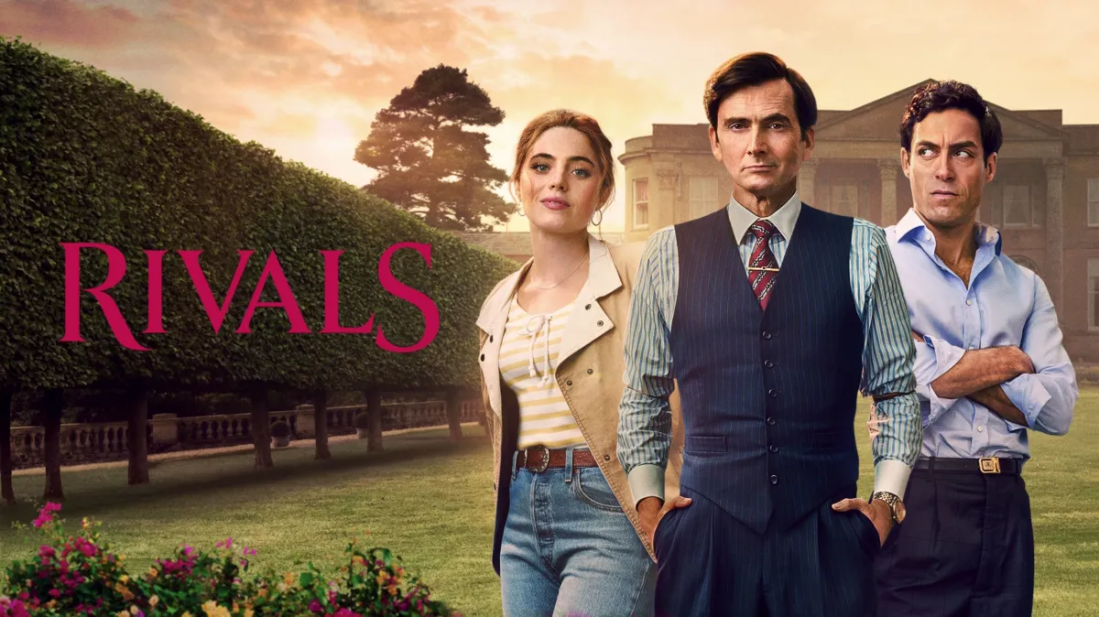
With Rivals, Disney+ delivers a delicious slice of glossy, high-octane escapism that whisks you straight into the decadent heart of 1980s Rutshire—a fictional English county where ambition, power, and scandal rule. Adapted from Jilly Cooper’s beloved series, this show is Bridgerton with perms and leg warmers. It is unapologetically indulgent and impossible to look away from.

As we follow Declan O’Hara and his family into this gaudy, glamorous world, the real one fades to static. With every slow pan across a country estate or shoulder-padded boardroom, you feel the shift—you’re no longer in your living room, you’re in the inner circle. The production design leans into 80s maximalism with flair giving it a larger than life feeling.

At the heart of it is the Gatsbian rivalry between David Tennant’s magnetic Tony Baddingham and Alex Hassell’s suave Rupert Campbell-Black. Their feud—new money versus old money, populist grit versus aristocratic polish—is both classic and sharply drawn. Tennant is clearly having the time of his life, chewing scenery with the kind of unhinged charisma that only he can deliver. Hassell, meanwhile, oozes the kind of charm that makes you hate yourself for loving him.

Yes, it’s sexy, but that’s not what makes Rivals so addictive. What hooks you, episode after episode, is the sheer fantasy of it all—the illusion of being in a world where everything is brighter, bolder, and drenched in glamour. For an hour, you’re not doomscrolling or doing laundry—you’re wrapped in fur, sipping champagne, plotting rival takeovers with a smirk.

All of Us Strangers – Review

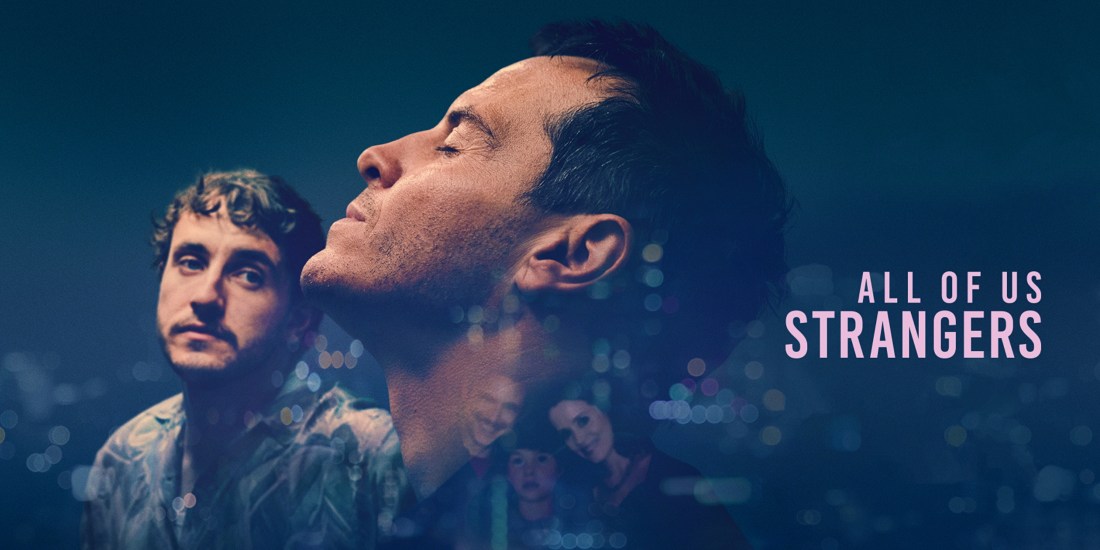
Andrew Haigh’s All of Us Strangers is a stunning, surreal meditation on grief, memory, and the aching human need for connection. At once beautiful and heartbreaking, the film exists in a space between the living and the dead, between reality and something more ineffable—a limbo both literal and emotional.

The cinematography is breathtaking. Each frame feels at once ghostly and tactile, bathed in soft light and shadow that gives everything a dreamlike haze. This really heightens the romance of the story. The flat where Adam Scott’s character, Adam, lives functions almost like a liminal space—an in-between zone untouched by time, suspended between the past and present. The eerie stillness of suburban London, stripped of its usual bustle, adds to the feeling that we’re watching someone drift between planes of existence.

Scott’s performance is a masterclass in quiet devastation. His character is held in stasis by grief, unable—or perhaps unwilling—to move forward. This emotional paralysis creates a doorway, one that allows the dead to return in the form of his long-deceased parents. The quasi-magical realism of their return feels earned, not fantastical but deeply human—rooted in longing.

Every conversation between Adam and his parents tears the heart. These moments are rendered with such intimacy that they begin to feel like intrusions into someone else’s most private pain. The film is, in many ways, the cinematic equivalent of someone asking, “Are you okay?”—at exactly the wrong moment. Or the right one. It opens the floodgates. By the time “The Power of Love” plays, not as nostalgia but as a gut punch, the emotional groundwork has been so delicately laid that the song lands like a dagger. You’ll never hear it the same way again.

Top Ten Hamilton Songs

This is a little different to my usual reviews, however, as Hamilton arrived on Disney Plus (and I’ve now watched it multiple times) I can’t get the soundtrack out of my head. Besides, I am still working my way through the next YA fantasy series I will next review.

Like many, I have been awaiting the release of Hamilton for months. It has been one of the only things to look forward to in lockdown for me. I have not been lucky enough to see it in London yet, so this was my first time experiencing the show. It blew me away. Having listened to the soundtrack and watched clips for years, some of my opinions of the songs changed while watching them as they were intended. So, I thought it would be interesting to rank my favourite songs here.

10. The Story of Tonight – Reprise

I love repeated melodies within a musical, which is one of the reasons I love this whole soundtrack. This is the reason why reprises tend to be my favourites. What I especially love about this reprise is that it’s funny. The five main characters in this song have great comedic timing. Them all being drunk is hilarious. “You are the worst Burr.” It gets me every time.

9. It’s Quiet Uptown

The simplicity of this song highlights its emotional significance. That’s a common theme in Hamilton. The most emotive songs seem all the gentler in comparison to the loud rap numbers. The way Angelica begins this number gives me chills. The repetition of the word ‘unimaginable’ is so apt, because to most this situation is exactly that. It’s clever because it resonates with everyone. “Can you imagine?” Lin tells the audience to imagine this scenario, which heightens the emotional weight of the number. Having Eliza forgive him at the end too adds another layer of relief almost in this darker part of the story.

8. Farmer Refuted

Another comedic song littered with historical references. The counter-rap (is that a thing?) is so great. I was just blown away by how difficult it must be to perform this, with the two lines opposing each other with different timings. With a bit of choreography thrown in as well, this song is just so impressive to watch, in my opinion anyway. “Don’t modulate the key then not debate with me.” I just really love this line. I also love how this number leads into the King’s introduction.  

7. The Room Where It Happens

A turning point for Burr. I’ll be honest here I was never the biggest fan of this song before watching the musical, but I was in awe of the performance when watching it for the first time. Leslie Odom Jr. kills this song! The belt at the end, the jazzy vocals. It’s his “villain” song. I love the ensemble in this number. The song, as a whole, does a great job of pointing out the issue with historical record and how some things are simply accepted despite the lack of witness. Then the song switches to a more personal view to Burr and his wish to get into the room. “You don’t get a win unless you play in the game.” This song does such a good job of displaying the opposing forces that are Burr and Hamilton. You see Burr’s switch after this with his emphasis on ‘I’, instead of singing about Alexander. (Which he does so often.)

6. Cabinet Battle #1

Who doesn’t love a rap battle? I love watching Daveed Diggs going against Lin. The way Lin uses words is outstanding and I think the Cabinet battles highlight his abilities. It’s a great way to put historical politics into the musical in an inventive way, as well as pushing the story along. “When Britain taxed our tea, we got frisky. Imagine what gon’ happen when you try to tax our whiskey.” It’s a great mixture of typical rap battles with the legal jargon that would be used in real cabinet meetings. These opposing battles between Hamilton and Jefferson are also used to heighten the punch the audience feels along with Burr when Hamilton takes Jefferson’s side later.

5. Your Obedient Servant

The tension at the beginning of this song foreshadowing what’s about to happen, using strings in the background to crescendo into the song. I love how passive aggressive this song is. The music switches from quite dark and minor in the main parts of the letter, to very light and major when they sarcastically say: “I have the honour to be, your obedient servant.” So clever. Shows the fake-ness/unauthenticity of the sign off. It is also the last song with any lightness in it, as the three that follow it are heavily emotional.

4. History Has Its Eyes on You

Man, I wish this song was longer. Christopher Jackson’s voice is so smooth and velvety in this song. One of the reasons I love this song is the lyrics portray the pressure of what it must mean to hold a position of influence. No matter what that position is. It fits in well with the Hamilton’s theme of legacy. “Even now I lie awake, knowing history has its eyes on me.” The idea that choices and decisions you make have repercussions and will go some way in what people will remember you as. This song helps illustrate what Washington meant to Hamilton and his influence on him.  

3. Satisfied

I really liked this song before I saw the musical but watching it had me stunned. It is one of the pieces that blow me away every single time. The whole set with the revolve and the lights moving in a way that creates this turning back effect. It is just visually a masterpiece. The playback of some of the choreography. The small details in the background. It is one of those numbers that you could watch on repeat and notice something new each time. Renee absolutely kills the performance. I love the way we get to see Helpless from a different perspective. It allows character development for both characters. It also plays into the theme of time running throughout the musical, as it turns it back.

2. Non-Stop

Again, I love this song for the portrayal of the two main protagonists and them trying to understand one another. You see the parallels in that they are both studying law next to one another, but Alexander always pulls ahead and that frustration from Burr is matched with Hamilton’s frustration to the other as well: “I don’t understand how you stand to the side.” The way they use the revolve to move Angelica around as she leaves and Eliza into centre stage, genius! Like ‘Satisfied’ there are so many small details in this one. I feel Burr’s annoyance and awe and confusion as to how Hamilton wrote 51 essays in 6 months. As a writer I almost feel personally attacked by: “How do you write like you need it to survive?” The countermelodies!!! This song builds for so long and the pay off does not disappoint. The use of the stairs to carry Washington across the stage as he belts his motif is great. All the main characters and their songs overlapping in this Act One finale, I can only imagine the chills you’d experience seeing this live.

1. Wait for It.

From the title to the gentler melody, everything about this song epitomises the difference between Hamilton and Burr. Burr is patient, Hamilton is not. This is Burr’s theme that is repeated. We see it crop up in Non-Stop. We get to learn more about Burr with the lyrics. Without this song, The Room Where It Happens would not be so significant. It provides the beginning of Burr’s development and his core morals that stick with him, despite changing political sides later. “I’m not falling behind or running late. I’m not standing still. I’m lying in wait.” I feel as though many people relate to this. “I am the one thing in life I can control. I am inimitable, I am an original.” Such motivational lyrics. It is this song, in my opinion, that solidifies Burr’s anti-hero status, as opposed to villain. Aside from the wonderful characterisation this provides, it’s just a really great song.

As I’m sure you can tell from my reviews, I am no music expert, this list is purely based on which songs I think are the best.

Let me know what your favourites are!

Remember, this is just my humble opinion!  

Top Ten Doctor Who Episodes

This list includes episodes beginning at the 2005 revival. While I’ve watched a few seasons of the older doctors, I haven’t watched enough to have any of them be in this list. I also haven’t kept up to date with Jodie Whittaker’s episodes, so if you think one of the newer ones deserved to be here, that’s the reason it isn’t!

I have to say I love Doctor Who and it was so hard to narrow this list down to just ten episodes. Some of my favourites are missing from this list because there are just so many great episodes.

10. The Empty Child/The Doctor Dances (2005)

Who would have thought the phrase: “Are you my mummy?” could be so creepy? This was by far the scariest episode for me watching as a ten-year-old. Watching it back now, it’s still very eerie and the gasmask transformation is disturbing. The adults saying “mummy” is quite funny to me now, but for the most part, still a creepy episode. The setting of London during the Blitz is not a new one, but the first for the revival. It adds some extra tension to the main story. I always found it a shame Eccleston wasn’t around for longer. Nine is a great Doctor. He is quite intense, still angry but has quite a dry sense of humour which I enjoy. I enjoy the whole of this season; however, I think they were still trying to find their feet. These episodes stand out for me though. One of the reasons this two-parter ranks so highly for me is the introduction of Captain Jack Harkness, a super interesting character. Furthermore, the idea of a zombie-like plague is a great way to amp up the tension. The Doctors elation at the idea he can save everyone, “just this once, everybody lives”, is slightly undercut by the fact they are mid air raid. Nevertheless, it’s still a nice moment.

9. Gridlock (2007)

I did a little bit of research into other top ten episodes lists. Of all I read, this episode did not seem to appear. I had to include it though because, for me, it epitomises what I came to love about Doctor Who. Russell T Davies was a master of writing through-season arcs, and there are several included in Gridlock. We re-visit somewhere we’ve been previously, giving the viewer a different view of the same place as well as the feeling of being in the know. The main premise is one I really enjoy, the motorway that goes on forever. The ‘villain’ of the episode, the Macra, aren’t particularly terrifying. However, they are simply a product of the more significant events in the episode. I really enjoy the side characters in this episode. The scenes of singing in the cars is particularly moving to me. Perhaps it is heightened by the pandemic, but it’s such an emotional moment to see the solidarity and hope in the face of uncertainty. They bring back the Face of Boe for this episode and he is revealed to be the saviour of those trapped on the motorway. Of course, Boe dies and leaves the Doctor with the message “you are not alone”. This has a great payoff with the season finale: Y.A.N.A. It also helps set in motion the speculation that Captain Jack is the Face of Boe. I just think this episode epitomises the excellence of Russell T Davies’ writing and that he was the only choice to bring back this show.  

8. Midnight (2008)

This episode should be shown in creative writing classes. I honestly think it is a masterclass in writing. Yes, the concept has been done before but do adapt it to sci-fi in the middle of a season is a great change of pace and just a great idea. Back in the day, when I was watching this on BBC and waiting every week for a new episode, I remember being disappointed by this one. But upon re-watching it quickly became one of my favourites. There are very little special effects. The characters stay in the carriage for most of the episode. It serves as a testament to what you can create with just words. The idea that the alien inhabits Sky’s body and learns through speech is a genius way to illustrate this. Having the Doctor’s voice taken away leaves the audience on the edge of their seat, as he is left vulnerable and in the hands of scared humans. It also delves into psychology a bit, showing the reactions of the different people and how they conform under certain pressures. Lesley Sharp and David Tennant’s back and forth in this episode is perhaps the most impressive parts. Throwing Colin Morgan in an already talented cast is another way to get my approval!

7. Listen (2014)

This is the only Capaldi episode on my list. I sort of fell-off the wagon during this season, after having been an avid fan for years. But this episode always stuck in my mind. Maybe it is because I am partial to horror and the scarier episodes of Doctor Who. What I love about this episode is it reminds us who the target audience is: children. It plays on the basic fear of a monster under the bed but acknowledging the adult/older viewers, they add in the layer of forgetfulness or things just turning off. It adds a nice layer to the tension and the fear. It’s a clever way of doing horror, because a simple dip in the bed when the characters are under it, or a person under a blanket, is such an inexpensive way to create fear. Then having the creature out of focus in the background, so the audience is focusing on it, but can’t fully see what is happening. There is something very comforting and intense about Capaldi’s Doctor. He created quite a polarised character and it works well for a Time Lord. I like the idea that Clara has such weight on the Doctor and his timeline. It is something seen across the previous two companions as well. The crack in time centring around Amy and the pull of the Doctor to Donna. Suggesting that the companions are ‘chosen’ for a reason, something more than simply an accomplice. Another element to this episode that I like is that the motive for the whole thing emanates from the Doctor’s need to know. His curiosity. He simply can’t let it go sometimes.

6. Turn Left (2008)

This is by no means a new idea; a few series have done something similar on the lines of choices and “what ifs”. Off the top of my head I can think of Buffy and iCarly, oddly enough, though I’m sure there are more. What is great about this episode is that it centres around Donna. She is such a great character who has excellent character development throughout the series. One of Donna’s character arcs is her self-identification. She often refers to herself as ‘just a temp’, despite all she has done and seen. Turn Left illustrates how important she and her choices are in this universe. What’s great about Doctor Who choosing this formula is that the stakes are so high. It also shows the other side of the Doctor’s adventures, the aftermath of what may happen should they fail. It’s great to see the past events by the side of Donna’s hilarious life view and dismissal of the alien activity. “England for the English”, gosh I forgot how dark this episode is. With the inclusion of Rose too, this episode makes for a great introduction to the following two episodes. I’m sure if I think about it too hard, there are plot holes in this as it wasn’t simply Donna’s time that would have been affected if Donna hadn’t saved him. The events in ‘Shakespeare’s Code’ should have still happened, the apocalypse would have happened in 1599. Perhaps it could be explained away, but it does provide some inconsistencies. Despite that, this is a well-written episode and helps add to the conclusion, the very sad conclusion, of this series. Oh, and that ending, “Bad Wolf”, chills every time! Any episode that shows us more Catherine Tate and Bernard Cribbins is always a plus.

5. Vincent and the Doctor (2010)

This is my first entry of Matt Smith’s Doctor and I have to say, despite my immense love of Tennant, Smith did an incredible job of filling his shoes and creating his own unique Doctor. While on this subject, though I think the music throughout Doctor Who is great, the music in Matt’s first season (Season 5) is something special. Murray Gold, correct me if I’m wrong, has been the composer from at least season 2 and deserves a lot more credit. Personally, I really enjoy the music he created for season five. Amy’s Theme is beautiful and the through-running motif from I Am the Doctor, appearing in Eleventh Hour and continuing throughout the season, is one of my favourite pieces of music from the whole series. Sorry, got a little distracted there, back to the main matter at hand.

The episodes that centre around historical figures always come with their issues. In this episode, for example, using an alien to explain Van Gogh’s mental health issues is a questionable decision. However, they don’t completely brush over it, pun intended. They do mention depression. The overall story of defeating an invisible alien that can only be seen by a genius artist does make sense, it’s just not the strongest storyline. Where this episode succeeds is in writing Van Gogh and bringing him to screen. Tony Curran does an incredible job. His emotive performance is something to be marvelled at, aided by the writing. Richard Curtis wrote this particular episode. Something new I learned for this review. The writer of Love Actually, About Time and The Boat that Rocked. I’m starting to see why Bill Nighy is in this episode. And while on that subject: Bill Nighy!! When Amy and the Doctor take Vincent to see his future exhibit, it is such a highly emotional scene. There is something so incredibly cathartic and painful about it. The scene that steal the show, however, is the one where Vincent talks so passionately about colour and the sky is animated in the style of ‘Starry Night’. It is simply stunning.

4. The Day of the Doctor (2013)

I want to preface this little review by saying I have not watched this since it aired! (Seven years ago!? Am I old?) I watched it again to see if it should make it on my list, and I think it definitely deserves to be here.  

This was a hugely anticipated episode, something fans, like myself, never thought they would actually see! The beginning of this episode, with the Tardis being helicoptered over London, feels rather cheesy. A small nod to Sherlock, Moffat’s other show, with the mention of using Darren Brown to cover things up! That’s something I didn’t notice the first time around. I think John Hurt was an excellent choice for the wartime Doctor, he does an outstanding job of portraying how tired the Doctor is of war, death and suffering. The glimpse into the Time War is pretty epic. Ah, the sonic-off that led to a million fanfics that should never see the light of day. I love Matt Smith’s Doctor, don’t get me wrong, but seeing Tennant again just re-ignites my love for ten. That being said, eleven still stands out here, it being his season and all. The banter between the three is the best part of this whole episode. The ending with the thirteen Doctors is just something else, what an introduction for Capaldi. I know the interface of Moment just takes Rose’s face, but it’s painful not to get to see ten interact with her. The one thing that frustrates me about this episode is trying to get my head around all the timeline stuff. But I’m sure the other viewers are far smarter than I am. The Tom Baker cameo, they really pulled out all the stops for this one, didn’t they? The epic scale of this special episode is the reason it had to be in my top five, even if I don’t watch it that often!

3. The Impossible Planet/The Satan Pit (2006)

Another great two-parter! The theme continues here of my top ten being the episodes that scared me the most. This is certainly no exception. The possessed Ood and Toby were enough to have me hiding behind a cushion. Written by Matt Jones, a one-off Doctor Who writer as far as I can tell, this episode has many of the Whovian elements that make it fundamentally Doctor Who but with a twist. The planet that shouldn’t exist, orbiting a black hole. With another writer, we would have perhaps seen a more predictable explanation. However, Jones does not shy away from using religion and I really like the way it is done. Never specifically pinpointing what the origins of the Beast are, but simply that it exists and will exist as long as people fear it. The Tardis just happening to be in the pit is something I can look past because, well, it’s Doctor Who. It is such a tense two-parter, with barely room to breathe. It again shows us the Doctor’s need to know, that curiosity and temptation that aligns him with humans. While it’s painful to see, splitting up the Doctor and Rose really allows Rose (Billie Piper) to shine. She is great in these episodes, taking control but always displaying both fear and hope as well. The side characters in this episode are what makes it even better. Each of them is compelling and well-written and acted, making it all the more moving at the end when Captain Zach is listing the dead.

2. The Doctor’s Wife (2011)

Excellent cast. I can’t stress that enough. Having the Tardis trapped in a body leads to a few great story-telling devices. 1. You can play around with time as the Tardis can see into the future. 2. It gives the Tardis some limitations, the human body creates weaknesses that allow for conflict. 3. The relationship between the Doctor and the Tardis is given actual two-way dialogue. What makes this episode so good is that the writers utilise each one of these. The dialogue of the Tardis in Idris’ body is funny and perplexing at the beginning as she is speaking in multiple tenses and suggesting things that will happen. This leads to nice payoffs in the second/third acts of the episode. Often Doctor Who will have guest writers and, I’m a little ashamed to say, I had to Google who wrote this one. Of course, it was Neil Gaiman. He is one of my all-time favourite writers and I should have known this! The episode feels correct within the Whoniverse, but also feels unique due to Gaiman’s writing. The mismatch, rubbish-tip likeness of this planet gives me major Labyrinth vibes. The garbage people scene? If you know, you know. The b-story, with Amy and Rory trapped inside the Tardis that’s been invaded by House, is tense. We see the theme of waiting play out yet again, adding to the arching storyline of the series. What’s really special and quite emotional about this episode is we get to see how much the Doctor cares for the Tardis, the two constants in this universe.

  1. Blink (2007)

Being a controversialist, I wanted to put something less predictable at the top of my list. Blink can be found holding the number one spot on many Doctor Who rankings; and for good reason! As I have explained in my other reviews, I love the episodes that scare me, so I really loved this one! It’s a little different in tone, not only because it doesn’t revolve around the Doctor and Martha. This episode is written more like a mystery or detective show with a supernatural twist. It’s got a cleat Moffat feel about it. The puzzles and riddles all fitting together, but with the addition of time travel. I find it fascinating how Moffat managed to create these monsters, who’s actual power isn’t all that scary, terrifying. Because the angels don’t kill you! The Easter egg part is my absolute favourite. I think it’s so clever. It’s introduced to characters that don’t know who the Doctor is but we, the audience, do. The part where Sally has the conversation with him is so great, and when the script runs out because the angels are coming, that is so tense! This has to be one of the most quotable episodes. Some gems include: “It goes ding when there’s stuff.” “The angels have the phonebox. That’s my favourite. I have got that on a T-shirt!” “Don’t turn your back, don’t look away and don’t blink!” And the way they end it with random statues around Britain, ultimate trolls. Just. So. Good!

Okay, so that’s it. I’ve had such a good time re-watching some of these episodes. I often forget how much I love this show! I would love to know your opinions on my list and if you think I missed any out!

Remember, this is just my humble opinion.

Harry Potter: Books and Films Ranked.

I am currently working my way through another YA series, The Infernal Devices trilogy. So, taking a small break from that, but sort of sticking to the YA/fantasy theme I thought I would rank the HP books and films. I was mainly curious to see where I would place each one and what my reasoning would be. I am ranking the books and films separately.

I want to preface this ranking by explaining that both the books and film series are one of my absolute favourites. So, while certain ones are in last place in this order does not mean I don’t still love them.

Books:

7. Philosophers stone: This, I believe, is quite an unpopular opinion. When I was making this list, I didn’t think this book would come last, but I just couldn’t put it above the others. I think as a stand-alone it does a phenomenal job of setting up the story of Harry and the wizarding world, it’s magical and there are a lot of foreshadowing in this which illustrates how great the story is. However, the writing improves with each book, the tone shifts to a darker one later which I am just more of a fan of. Personally, I just couldn’t put any other book lower than this one.

6. Order of the Phoenix: There’s lots of things I love about this book. The ending is one of them. The scenes in the ministry are some of the best in the entire series. While I love long novels and intricate stories, I do feel OOTP is a bit too long. The middle felt as though it could have done with some editing. There are just one too many scenes with Umbridge reviewing classes. It does really drive the character home, but she’s so over-the-top dislikeable anyway, I just felt as though some of this could have been taken out and made the whole thing pacier. Also, the scenes with Cho and Harry, particularly at Madam Puddifoot’s, make me cringe.

5. Chamber of Secrets: This book still makes me shiver. It is, in my opinion, the scariest book. Not the darkest but the creepiest. The chilling voice Harry hears in the walls and blood threats on the walls. Not to mention the spiders. I also really love the idea of the diary and Tom Riddle’s teenage arrogance adds another nice layer to the villain. We are also introduced to the first Horcrux of the series, which has an excellent pay off later. Above all books, in my opinion, you get the feeling that Hogwarts isn’t safe. That the castle has elements not even Dumbledore understands. We get a small look into the history of the castle and its founders, which is fun. I also like the development of Draco in this book. Considering this is an early book, and the protagonists are twelve/thirteen, the theme of prejudice and race are prevalent. The reason it’s not higher is because the others are just so great.

4. Deathly Hallows: It’s a solid end to the story. It’s satisfying in some ways but heart-wrenching in others. It’s pretty hard to fault this book. I simply can’t put it any higher though because I am just never a fan of endings. They always feel a little too neat, too wrapped up, particularly in fantasy. It was for this reason I was not a fan of the epilogue. I think I would have preferred the ending without it. I can see why readers may enjoy it/crave it, as we saw these characters grow and overcome evil, some readers may want that catharsis of seeing the cycle complete (the protagonists sending their children to Hogwarts). In saying this I was still moved by this ending, so it clearly had the desired effect.

3. Prisoner of Azkaban: For a long time, this was my favourite. However, sections of it sort of annoy me now. One section being the time travel. Another being Ron and Harry’s treatment of Hermione. I understand it’s needed to display character growth and they are young, but Hermione is always right. That aside, I love this book. The introduction of Hogsmede makes me feel all cosy inside. Exploring more secret parts of the castle. The marauders map and the marauders themselves. On top of that, my favourite character is introduced in this one: Lupin.

2. Half Blood Prince: I love a villain. HBP was always going to be high on my list because we get so much of Voldemort’s backstory and I love it. Though Voldemort will never be the first villain I think of when listing great literary villains, this book works in showing his motives and the choices he made. I also really like the subversion of expectations we get in many parts of this book. We see Harry’s enjoyment of DADA dwindle and his like for Potions rise. I love the introduction of Slughorn and the slug club, it plays into the theme of growing up in this novel. The last chapters in this book are excellent and so gripping. The cave, the Inferi and obviously Dumbledore’s death. You really leave that book feeling for Harry. It’s up to him now, and while he’s not alone, he feels that responsibility. It fits so well that this is the last book they spend in school because everything really does change.

1. Goblet of Fire: For me this is simply the most entertaining book. I love the addition of the quidditch world cup and the Triwizard tournament. The introduction of the new schools and the Yule Ball. There’s also so many red herrings in this book. I remember reading it for the first time and being convinced that it was Bagman who put Harry’s name in the goblet. Even Ron not talking to Harry, painful as it is, allows us to see more of Harry and Hermione’s relationship which I enjoyed. I’ve talked about tone quite a bit and I think this one has the biggest tone shift of them all. That scene in the graveyard is excellent. It reintroduces Voldemort so well. I still get nervous reading it now. All the fears the books have been building on are realised and Harry is right in the middle of it. Cedric’s death is the first of many. “Kill the spare” is so simple, but it really illustrates the magnitude of Voldemort’s immortality. From the death eaters at the world cup, to the tasks, to the graveyard; the story in this book is so packed with action and tension. It comes as midway through the series and it just really sets the pace for the following books. I think this is another reason why OOTP is low on my list because it follows this one.

Films:

8. Philosophers Stone: I know. I’m sorry and I promise I don’t hate this story. Again, I just felt as though I couldn’t put it above the others. The feeling I get watching this film is pure nostalgia. Some of the special effects hold up, though not all of them. (Thinking of the Troll). Beyond that it just doesn’t really excite me anymore. This may be because I’ve seen it so many times, but I just think it’s not as exciting. The scenes I really enjoy are the Mirror of Erised scene and then down the trap door. I like the introduction to Quidditch. Oliver going through the rules and the lead up to the game, with the tense music you feel Harry’s nerves. I also think this film has one of the best scores in the series. Every piece is just so memorable. Again, I do love this film, I just think all the others are better.

7. Deathly Hallows pt. 1: I quite like this film and I’m not mad they split up the last book at all. Structure wise they did a good job of creating an arc with only the first half of the book. That being said, all the less exciting stuff happens in this half. I do love the scenes at the Malfoy Manor. And the part in Godric’s Hollow is super creepy. Unlike a few other deaths (mainly in pt. 2) they deal with Dobby’s death so well in this film, he is given an excellent send off that still makes me ball like a baby. I also have to mention the animation used for the telling of the Tale of the Three Brothers. It was such a beautiful way to tell the story, it looked straight out of a Henry Selick film.

6. Goblet of Fire: The film didn’t really stand a chance next to the book. There was just so much in that book it would need a 5-hour film to fit it all in. There are some things I think it does well, having the Durmstrang and Beauxbatons enter immediately allows the film to get to the inciting incident fast. Not to mention the Dumstrang arrival was just really cool! The cast is great. Mad-Eye, Cedric and Barty Crouch jr are particular highlights. I think they do a good job of the first two tasks. However, so much is missed out its hard not to feel cheated. The maze was completely changed. The world cup, I mean come on! So many fans were looking forward to seeing that. And in my opinion, the whole film is edited slightly strangely. It feels a bit choppy in places.

5. Half Blood Prince: Again, my favourite parts of this book were left out. I have put it above GOF because I think it does certain things well. I like the inky images when they do use the pensive. Although, if anything, this makes me sad that they didn’t include all the backstory scenes. The cinematography in this film is one of the best, maybe only second to POA. The cave scene, with the Inferi, was made for screen and translated amazingly in this adaptation. Tom Felton’s Malfoy got a lot more screen time in this, which was great to see. Daniel Radcliffe’s acting while Harry is using Liquid Luck is hilarious, and definitely a highlight of the whole series for me. They pushed aside a lot of the main plot here to make way for Harry and Ginny, Ron and Lavender and Ron and Hermione. I think these are important parts of the story but to heighten those and take away from the main antagonist’s back story, I feel, was a mistake. They also had the chance to really develop Ginny in this film and my god did they fail.

4. Deathly Hallows pt. 2: They did many things wrong in this film. The most frustrating being the death of Voldemort. But the battle of Hogwarts is epic. The scene where Harry, Ron and Hermione return to Hogwarts gives me chills just thinking about it. And the portrayal of Snape and his true part was brilliant. So many deaths are glossed over with a camera pan. (Tonks and Lupin deserved better). I know they were mid battle so it would have been difficult for Harry to grieve, he was simply in shock but just a little more time on the deaths would have heightened the emotion. Seeing George, Ron and Molly over Fred’s body is heart-breaking. The film starts with a bang as they infiltrate Gringotts, Hermione polyjiuced as Bellatrix. Helena absolutely nails Emma Watson playing Hermione playing Bellatrix. Wow, that’s confusing! They rushed over the explanations for both the master of the elder wand and the horcrux in Harry, leaving non-book-readers confused.

3. Chamber of Secrets: Often I hear people rank this as their least favourite film, which I can’t understand. I love this film. As a child I watched it on repeat on the weekends. I think it’s a great adaptation from the book. They really don’t miss much out! It has such an ominous feeling to it. Much of the film is cast in a dim/dark light with a slightly green hue adding to the doubt Harry is feeling about his morality. It has more Draco in it than most of the other which I enjoy. The spider scene is grim, but it’s supposed to be. Tom Riddle is well cast and the face off in the Chamber is excellent. The Basilisk holds up and is still pretty terrifying. I also think the casting of Kenneth Branagh as Lockhart was genius. Furthermore, who didn’t fall in love with Dobby!? (Okay, I’ll admit, he is a little annoying.)

2. Prisoner of Azkaban: I’m sure it surprises no one that this is high. It is arguably the most beautifully shot of all of the films, so aesthetically pleasing. Again, the casting for this (aside from the issue of age, but that was because they were casting off Alan Rickman, so I’m not too mad) is phenomenal. Oldman makes a great Sirius and Thewlis’ Lupin is fantastic and so likeable. I think the dementors were done well, so creepy. The shots in this film are sensational, you could take a still from almost any scene and it’s like artwork. They built Hogsmeade beautifully. Buckbeak was animated brilliantly and the quidditch games were kicked up a notch! The only real issue I have with this film again is the time travel. While I loved Harris’ Dumbledore and do think his portrayal was closer to the book version, I really enjoy Gambon’s version too. This is where he takes the reins and I think his darker, more pensive Dumbledore heightens the whole tone of this film.

1. Order of the Phoenix: I am unsure if this is an unpopular opinion or not, but this film is my favourite. Unlike GOB and HBP, it removed the right parts of the book. So much of the middle is made into a montage which works really well. I think there is a nice amount of humour in this one. They begin to set up Ginny’s character and provide quite a nice springboard for her, however this was totally missed in the next film. Imelda Staunton does an outstanding job of bringing Umbridge to life. I think the connection between Harry and Voldemort is done well. I love the introduction of Luna and the thestrals, it plays into the theme of loneliness and this comes back around in the end with Harry, during the possession scene, seeing how loneliness and the lack of love is Voldemort’s weakness. This was added into the films, but I really like it. It would have been nice to see a little more of Sirius and the Department of Mysteries in general, but again I think they focused on the right parts of the story in this film. One of the only things that makes me mad about this adaptation is not hearing Dame Maggie Smith say those four immortal words: “Have a biscuit, Potter.”

There you have it, thanks for sticking with it until the end!

These are my current opinions, but to be honest, they are always changing! Let me know if there’s anything you agree or disagree with! What are your favourites?

This is just the humble opinion of a Hufflepuff.

The Anonymous Bookaholics Tag

Thank you to Ivana at @bookprejudice for tagging me in this! Your answers were so interesting, I’m excited to complete mine!


1. What do you like about buying new books?
Oh so many things! I love the feel of being surrounded by (and stroking) books and admiring the cover art. I love seeing which books grab my attention. I love knowing that the small brick of pages I’m holding will introduce me to a new world, new characters and new stories.

2. How often do you buy new books?
More than I care to admit! Having completed four years of university studying Literature, I bought MANY books for the course. It’s nice to buy books for myself now!

3. Bookshops or online book shopping: which do you prefer?
Bookshops! Bookshops! Bookshops!

4. Do you have a favourite bookshop?
My local bookshop, Griffin Books, is lovely. It’s a small, treasure chest of ceiling to floor books. And the staff are all lovely. I am also lucky to live not far from Hay-on-Wye, home to the Hay Film and Literature Festival, which has many amazing little bookshops.

5. Do you pre-order books?
I’ve pre-ordered a few books in my life. Mainly if I’m a huge fan on the author, I’ll pre-order. A nice little bonus to that is they will often sign the book.

6. Do you have a monthly buying limit?
I don’t tend to limit myself, no. I go through weeks where I don’t read and then periods where all I do is read. So I don’t tend to buy books every month.

7. How big is your wish list?
It’s about 80 books long, is that big? I’m not sure…

8. Which three books from your wish list do you wish to own right now?

  1. The Kingdom of Back by Marie Lu
  2. Nevernight by Jay Kristoff
  3. War Girls by Tochi Onyebuchi

That was fun! I haven’t tagged anyone because I’m old and can’t figure out how! But feel free to join in!

The Priory of the Orange Tree

A prime example of why the phrase ‘don’t judge a book by its cover’ frustrates me. The stunning cover of this novel is the reason I picked it up, and I am so glad I did. This was the first Samantha Shannon novel I read and what an introduction! A re-imagined feminist high-fantasy novel that I cannot recommend enough. The size (800 pages) may look intimidating, but I promise by the end you’ll wish it was longer.

(Spoilers Ahead)

As with most fantasy novels, setting must be discussed. Shannon crafted a perfectly unique, immersive world in Priory. Each new location has a distinct feel and was so intricately described I could smell them. The characters, though travelling, also reflect the place and the status of each character allows for different perspectives. The four protagonists, Ead, Loth, Tane and Niclays are totally realised characters with different motives that allow their paths to cross. Tane and Niclays perhaps the most obvious example of this, lives intertwining without knowing. This gives the reader a nice inside track and prompts us to turn the page to see their realisation/meeting, which was as satisfying as I hoped. I have seen criticism about the ‘weak’ male characters in this novel. I do not understand this criticism. Both Loth and Niclays hold significant roles in the story. Furthermore, they are complicated and multi-layered, something rather unique for high fantasy. They both represent the highly apparent theme within these novels of questioning beliefs, be they religious of not. Niclays is also the most interesting character in terms of morality. He provides a very grey area there, ultimately, I think his heart is in the right place. I assume this criticism comes as a result that it is Ead and Tane that have the most traditionally heroic roles. I loved this. It was refreshing and very satisfying to sink into a world of gender equality. Besides, Sir Kitson Glade did not risk his life, purely out of loyalty, for you to say the men in this story were ‘weak’. (I am still not quite over his death.) Furthermore, Chassar is another a great male character! Tane’s story was so interesting it could occupy a novel of its own but having this alongside the other stories allow for this to somewhat serve as an origin story. This works perfectly as a stand-alone, but also feels as though it could build to something more. Ead, in Sabran’s court, was my favourite section of the novel. The weaving of the political aspects of the West into the story were very interesting. Shannon’s dragonkind was also a very refreshing take on the fantastical creature. Having the divide between dragons and wyrms/fire-breathers. This was a clever tool as had the dragons simply been the antagonists, the human’s beating them would have been unrealistic. On the other hand, having dragons be on the side of the protagonist and having only human antagonists would lessen the stakes. I loved seeing the bond between Tane and her dragon. Another great addition to this world was the Priory. A significant place that doesn’t appear until Loth is there, serving as an outsider, just as the reader. It is great to see it from Loth’s viewpoint before Ead’s as it allows the reader to view the corruption within it. One very interesting character in this book is Queen Sabran. While we only see her through the eyes of Ead and Loth, she is well developed. It was an interesting move on Shannon’s part not to have chapters from Sabran’s viewpoint, but in concealing parts of her it allowed the reader to unfold her character along with Ead. Their relationship development seems natural and you really do feel for Sabran.

I could go on and on about story in this novel. There are so many characters, backstories, histories and plot points I’ve not even touched upon which is a testament to how much is packed into this novel. However, what I think deserves recognition now is Shannon’s use of language. Part of the reason this world is so brilliantly fashioned is through the exquisite language. While there are far too many beautiful lines to list them all, I noted down a few that made me swoon. (Apologies, I did not note down the page number. Dreadful, I know.)

“Her name had been lost to time, but the fear of her enchantments, and her malice, had knitted itself into the bones of the Inysh and seeped through generations.”

“Dawn cracked like a heron’s egg over Seiiki.”

“Her room looked over a courtyard, where a fishpond was churned to bubbles by the downpour.”

“The sky was bruised with cloud, but the sun left a finger-smear of honey.”

These are all perfect examples of how word-choice is crucial in great writing. Shannon does not need to over-describe because the words she uses create such a strong image. One notable element Shannon wrote of often throughout this story was light. Her use of light to display mood and atmosphere, or to highlight certain things was very well done. It sets her world in a hazy orange hue. (For the most part.) The images she created in doing so made me imagine the scenes coming to life in a beautiful animation reminiscent of Studio Ghibli’s films. (I mean, imagine how stunning that could be!)

While there are smaller conflicts running throughout the novel, the main conflict remains the Nameless One and his return. This fear is developed well through the story, the smaller battles are difficult enough to heighten the tension for the final one. It is the immense build up to this final scene that makes it somewhat anti-climactic. I thought the execution of the battle was good, it was simply just quite short. This did allow for a quickened pace however, reflecting the action. Despite the fact these characters struggled to obtain weapons in order to vanquish the Nameless One, the defeat just felt a little too easy. That is perhaps the only quandary I have with this novel. It is also what makes me feel as though it is more an origin story. In terms of high fantasy, this is one of the best novels I’ve ever read and will continue to push it on my friends and family. But that’s just my humble opinion.

p.s. If anyone has any recommendations to novels similar to this one, please let me know!

Six of Crows/Crooked Kingdom

Where to begin! This has quickly become one of my favourite YA series of all time. It’s gripping, gritty and wonderfully entertaining.

It moved away from what has become expected of YA fantasy. Even in the last series I discussed, Shadow and Bone, Bardguo relied on certain tropes (love triangle etc.). In SoC and CK she almost inverts these tropes. Yes, the characters still ‘couple up’, but I don’t see that as unrealistic especially due to their age.

What is most outstanding about these novels is the character work. Bardugo creates phenomenally unique voices for each of the six protagonists. This is aided by having close third-person narration and swapping perspective from chapter to chapter. This is something more common with adult fantasy. It is one of the techniques that allows these novels to feel slightly more mature than the trilogy before it. Each character is distinctive, and each relationship is different and complicated, and just feels real. Jesper is my personal favourite. A twitchy sharpshooter who can’t walk away from a bet. His character ark is great as we learn he is Grisha and starts to learn how to use his power. Matthias and Nina both grow to learn each other’s prejudice and I really like the way parts of their history are interspersed as the team make their way to the Ice Court. As it was a path they trod together previously, it did not feel as though it was an exposition dump, it felt well placed and these memories would realistically be at the forefront of their minds while in Fjerda.

Bardugo truly created an immersive world that is set up in the Shadow and Bone trilogy and furthered brilliantly in this duology. Ketterdam is an excellent setting for this story and the characters. A melting pot of barrel thugs and wealthy merchants. The claustrophobic, gritty streets of Ketterdam create a stark contrast to the clean-cut Ice Court.

The construction of story in this series is something to be marvelled at as well. The intricate plot is interconnected with the scheming mind of Kaz. Using the different character viewpoints allows for certain gaps in the readers knowledge and allows Bardugo to pull the rug from under us many times. The tense scenes are written with such pace it gets your heart racing and these are matched with the backstory scenes often adding to the context of the scene and allowing for character development. Each character has a sad or horrific backstory emphasising the dark tropes in the story. Bardugo doesn’t shy away from hard topics like corruption, class division, racial issues and murder. This only adds to the cathartic feeling the reader receives at the ending. The realism of the ending is improved by the fact not all of them make it out. Having a Matthias chapter to show his death was particularly painful, but also done beautifully.

This is a fairly one-sided review, perhaps I will revisit these stories in the future and see if my opinion changed but for now I think these stories are pretty untouchable! But that’s just my opinion!