Chuck Chuck Baby – Review

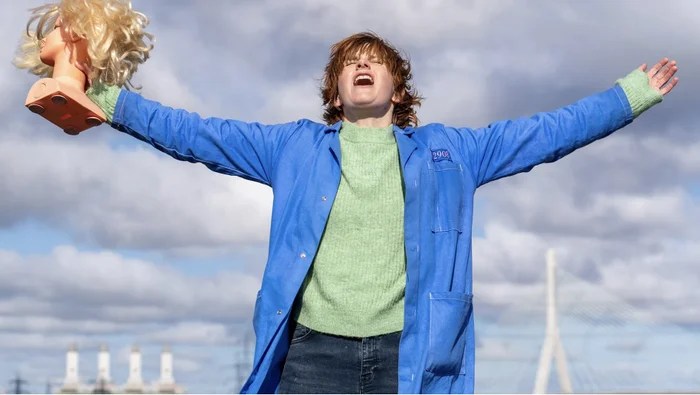
Chuck Chuck Baby is a tender, offbeat gem of a film that blends the grit of working-class life with the sparkling charm of a jukebox musical, delivering a heartfelt coming-of-age story about starting over—particularly from the queer, female perspective.

At its core is Helen, played with aching vulnerability and quiet strength by Louise Brealey. Her journey of self-discovery and reconnection is both specific and universal, deeply rooted in the common queer experience of having to rebuild and rediscover oneself later in life. The arrival of her old flame, Joanne (a magnetic performance by Annabel Scholey), acts as a catalyst, unlocking memories, regrets, and new hope. Their chemistry crackles—playful, intimate, and electric without ever feeling forced. Watching them together is a genuine joy.

What makes Chuck Chuck Baby stand out isn’t just its heartfelt narrative but the way it dares to contrast its bleak, industrial setting with moments of unfiltered whimsy. Set against the grey backdrop of a chicken factory, the film sprinkles in delightfully kooky musical numbers. It’s a melting pot of the weird and the utterly mundane and that tonal contradiction reflects Helen’s emotional landscape as she stumbles toward rediscovery.

The wider ensemble of factory workers forms an unlikely but deeply affecting surrogate family. Their camaraderie, bickering, and quiet acts of care become the beating heart of the film. It’s through them that Chuck Chuck Baby reveals its central message: that love, in all its forms, is what gives life colour.

Musically, this is a jukebox musical like nothing I’ve ever seen. The opening number immediately brought to mind the iconic “Wild World” scene from Skins—unpredictable, raw, and beautifully staged. But it was Helen losing herself to Neil Diamond’s “I Am… I Said” that absolutely floored me. It’s one of those rare cinematic moments that’s simultaneously hilarious and heartbreaking.

I laughed out loud. I cried. And really, what more can you ask for than that?

Wednesday – Review

Snap, Snap – The Addams Family Goes Gothic YA

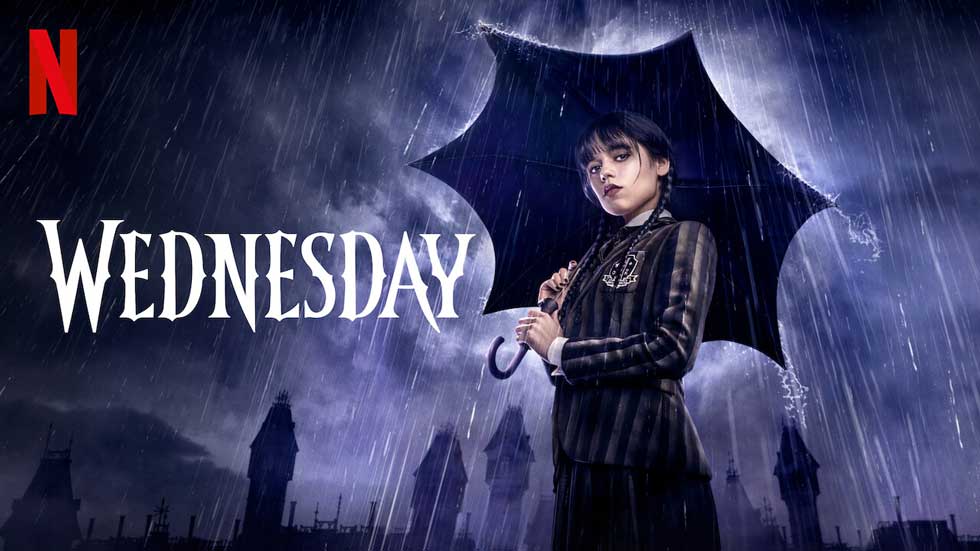
Everybody’s favourite spooky family gets the Tim Burton treatment in Wednesday, Netflix’s sleek, gothic teen mystery set in a school for supernatural misfits. And honestly? I didn’t hate it.

While Burton may have softened since his Nightmare Before Christmas and Edward Scissorhands heyday, his stylistic fingerprints are all over this show—from the towering architecture of Nevermore Academy (shot in Romania, a perfect gothic backdrop) to the pale complexions, looming shadows, and deadpan one-liners. It’s creepy, kooky, mysterious, and spooky… mostly.

The real triumph here is Jenna Ortega’s Wednesday. She’s insufferably miserable in all the right ways—stone-faced, sharp-tongued, and oddly magnetic. Ortega doesn’t just imitate the character, she inhabits her with a fresh confidence, balancing the iconic bleakness with enough vulnerability to make her evolution feel earned. Watching her butt up against cheerful werewolf roommate Enid, overbearing adults, and awkward teenage suitors is a highlight. These collisions force Wednesday to (grudgingly) grow, and it’s deeply satisfying to watch.

That said, some of the original Addams charm is lost in translation. The show suffers from a noticeable lack of Gomez and Morticia, whose romantic, macabre energy gave the earlier versions of the family their heart. Luis Guzmán and Catherine Zeta-Jones do what they can, but they’re sidelined in favor of a Hogwarts-meets-Riverdale teen plot that, while entertaining, feels slightly overstuffed. The ancestral haunting subplot had the bones of something brilliant—it felt thematically in step with the Addams’ legacy—but the show’s insistence on playing it overly straight zaps some of the fun. A touch more self-awareness or camp might have balanced the tone better.

Still, the supporting cast shines. Emma Myers’ Enid is an absolute delight, balancing bubbly optimism with genuine emotional depth. Gwendoline Christie’s Principal Weems commands every scene with elegance and menace, and Hunter Doohan as Tyler does a commendable job walking the line between charm and deception. Then there’s Christina Ricci—returning to the Addams universe not as Wednesday, but as a teacher with secrets of her own. Her performance is both nostalgic and shrewd. Yes, her villainy is clearer on rewatch, but Ricci’s natural likability keeps you guessing, making the eventual reveal genuinely effective.

Visually, the show is gorgeous. The Romanian setting gives the show a real sense of place—misty forests, looming buildings, and dark corners that feel like they were pulled from a gothic fairytale. It’s the perfect frame for Wednesday’s grim worldview.

In the end, Wednesday is a stylish, slightly uneven, but thoroughly watchable reimagining of a classic. It’s less a love letter to the Addams Family and more of a spin-off that dabbles in the macabre while firmly planting itself in the YA genre. If Burton’s edge has dulled, Ortega sharpens it again with a performance that’s as cold and cutting as it is compelling.

Rivals – Review

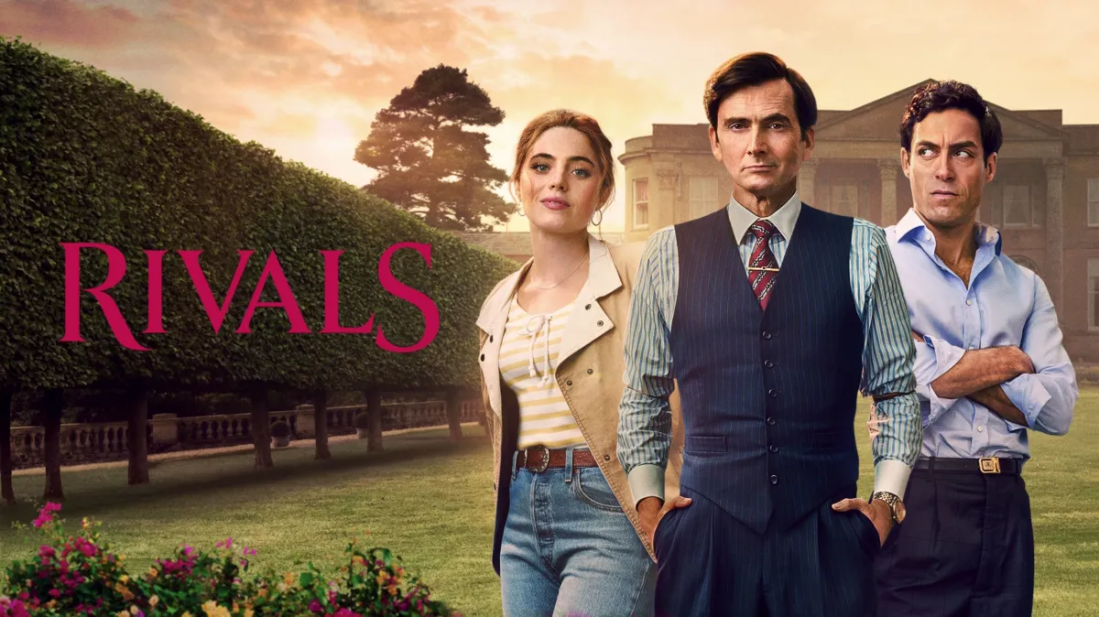
With Rivals, Disney+ delivers a delicious slice of glossy, high-octane escapism that whisks you straight into the decadent heart of 1980s Rutshire—a fictional English county where ambition, power, and scandal rule. Adapted from Jilly Cooper’s beloved series, this show is Bridgerton with perms and leg warmers. It is unapologetically indulgent and impossible to look away from.

As we follow Declan O’Hara and his family into this gaudy, glamorous world, the real one fades to static. With every slow pan across a country estate or shoulder-padded boardroom, you feel the shift—you’re no longer in your living room, you’re in the inner circle. The production design leans into 80s maximalism with flair giving it a larger than life feeling.

At the heart of it is the Gatsbian rivalry between David Tennant’s magnetic Tony Baddingham and Alex Hassell’s suave Rupert Campbell-Black. Their feud—new money versus old money, populist grit versus aristocratic polish—is both classic and sharply drawn. Tennant is clearly having the time of his life, chewing scenery with the kind of unhinged charisma that only he can deliver. Hassell, meanwhile, oozes the kind of charm that makes you hate yourself for loving him.

Yes, it’s sexy, but that’s not what makes Rivals so addictive. What hooks you, episode after episode, is the sheer fantasy of it all—the illusion of being in a world where everything is brighter, bolder, and drenched in glamour. For an hour, you’re not doomscrolling or doing laundry—you’re wrapped in fur, sipping champagne, plotting rival takeovers with a smirk.

All of Us Strangers – Review

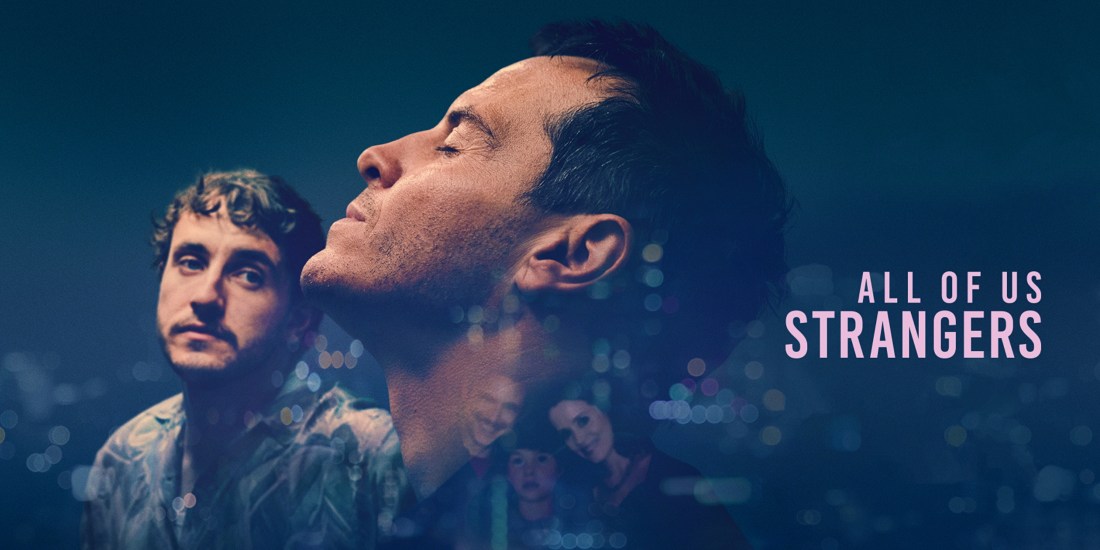
Andrew Haigh’s All of Us Strangers is a stunning, surreal meditation on grief, memory, and the aching human need for connection. At once beautiful and heartbreaking, the film exists in a space between the living and the dead, between reality and something more ineffable—a limbo both literal and emotional.

The cinematography is breathtaking. Each frame feels at once ghostly and tactile, bathed in soft light and shadow that gives everything a dreamlike haze. This really heightens the romance of the story. The flat where Adam Scott’s character, Adam, lives functions almost like a liminal space—an in-between zone untouched by time, suspended between the past and present. The eerie stillness of suburban London, stripped of its usual bustle, adds to the feeling that we’re watching someone drift between planes of existence.

Scott’s performance is a masterclass in quiet devastation. His character is held in stasis by grief, unable—or perhaps unwilling—to move forward. This emotional paralysis creates a doorway, one that allows the dead to return in the form of his long-deceased parents. The quasi-magical realism of their return feels earned, not fantastical but deeply human—rooted in longing.

Every conversation between Adam and his parents tears the heart. These moments are rendered with such intimacy that they begin to feel like intrusions into someone else’s most private pain. The film is, in many ways, the cinematic equivalent of someone asking, “Are you okay?”—at exactly the wrong moment. Or the right one. It opens the floodgates. By the time “The Power of Love” plays, not as nostalgia but as a gut punch, the emotional groundwork has been so delicately laid that the song lands like a dagger. You’ll never hear it the same way again.

Top Ten Hamilton Songs

This is a little different to my usual reviews, however, as Hamilton arrived on Disney Plus (and I’ve now watched it multiple times) I can’t get the soundtrack out of my head. Besides, I am still working my way through the next YA fantasy series I will next review.

Like many, I have been awaiting the release of Hamilton for months. It has been one of the only things to look forward to in lockdown for me. I have not been lucky enough to see it in London yet, so this was my first time experiencing the show. It blew me away. Having listened to the soundtrack and watched clips for years, some of my opinions of the songs changed while watching them as they were intended. So, I thought it would be interesting to rank my favourite songs here.

10. The Story of Tonight – Reprise

I love repeated melodies within a musical, which is one of the reasons I love this whole soundtrack. This is the reason why reprises tend to be my favourites. What I especially love about this reprise is that it’s funny. The five main characters in this song have great comedic timing. Them all being drunk is hilarious. “You are the worst Burr.” It gets me every time.

9. It’s Quiet Uptown

The simplicity of this song highlights its emotional significance. That’s a common theme in Hamilton. The most emotive songs seem all the gentler in comparison to the loud rap numbers. The way Angelica begins this number gives me chills. The repetition of the word ‘unimaginable’ is so apt, because to most this situation is exactly that. It’s clever because it resonates with everyone. “Can you imagine?” Lin tells the audience to imagine this scenario, which heightens the emotional weight of the number. Having Eliza forgive him at the end too adds another layer of relief almost in this darker part of the story.

8. Farmer Refuted

Another comedic song littered with historical references. The counter-rap (is that a thing?) is so great. I was just blown away by how difficult it must be to perform this, with the two lines opposing each other with different timings. With a bit of choreography thrown in as well, this song is just so impressive to watch, in my opinion anyway. “Don’t modulate the key then not debate with me.” I just really love this line. I also love how this number leads into the King’s introduction.  

7. The Room Where It Happens

A turning point for Burr. I’ll be honest here I was never the biggest fan of this song before watching the musical, but I was in awe of the performance when watching it for the first time. Leslie Odom Jr. kills this song! The belt at the end, the jazzy vocals. It’s his “villain” song. I love the ensemble in this number. The song, as a whole, does a great job of pointing out the issue with historical record and how some things are simply accepted despite the lack of witness. Then the song switches to a more personal view to Burr and his wish to get into the room. “You don’t get a win unless you play in the game.” This song does such a good job of displaying the opposing forces that are Burr and Hamilton. You see Burr’s switch after this with his emphasis on ‘I’, instead of singing about Alexander. (Which he does so often.)

6. Cabinet Battle #1

Who doesn’t love a rap battle? I love watching Daveed Diggs going against Lin. The way Lin uses words is outstanding and I think the Cabinet battles highlight his abilities. It’s a great way to put historical politics into the musical in an inventive way, as well as pushing the story along. “When Britain taxed our tea, we got frisky. Imagine what gon’ happen when you try to tax our whiskey.” It’s a great mixture of typical rap battles with the legal jargon that would be used in real cabinet meetings. These opposing battles between Hamilton and Jefferson are also used to heighten the punch the audience feels along with Burr when Hamilton takes Jefferson’s side later.

5. Your Obedient Servant

The tension at the beginning of this song foreshadowing what’s about to happen, using strings in the background to crescendo into the song. I love how passive aggressive this song is. The music switches from quite dark and minor in the main parts of the letter, to very light and major when they sarcastically say: “I have the honour to be, your obedient servant.” So clever. Shows the fake-ness/unauthenticity of the sign off. It is also the last song with any lightness in it, as the three that follow it are heavily emotional.

4. History Has Its Eyes on You

Man, I wish this song was longer. Christopher Jackson’s voice is so smooth and velvety in this song. One of the reasons I love this song is the lyrics portray the pressure of what it must mean to hold a position of influence. No matter what that position is. It fits in well with the Hamilton’s theme of legacy. “Even now I lie awake, knowing history has its eyes on me.” The idea that choices and decisions you make have repercussions and will go some way in what people will remember you as. This song helps illustrate what Washington meant to Hamilton and his influence on him.  

3. Satisfied

I really liked this song before I saw the musical but watching it had me stunned. It is one of the pieces that blow me away every single time. The whole set with the revolve and the lights moving in a way that creates this turning back effect. It is just visually a masterpiece. The playback of some of the choreography. The small details in the background. It is one of those numbers that you could watch on repeat and notice something new each time. Renee absolutely kills the performance. I love the way we get to see Helpless from a different perspective. It allows character development for both characters. It also plays into the theme of time running throughout the musical, as it turns it back.

2. Non-Stop

Again, I love this song for the portrayal of the two main protagonists and them trying to understand one another. You see the parallels in that they are both studying law next to one another, but Alexander always pulls ahead and that frustration from Burr is matched with Hamilton’s frustration to the other as well: “I don’t understand how you stand to the side.” The way they use the revolve to move Angelica around as she leaves and Eliza into centre stage, genius! Like ‘Satisfied’ there are so many small details in this one. I feel Burr’s annoyance and awe and confusion as to how Hamilton wrote 51 essays in 6 months. As a writer I almost feel personally attacked by: “How do you write like you need it to survive?” The countermelodies!!! This song builds for so long and the pay off does not disappoint. The use of the stairs to carry Washington across the stage as he belts his motif is great. All the main characters and their songs overlapping in this Act One finale, I can only imagine the chills you’d experience seeing this live.

1. Wait for It.

From the title to the gentler melody, everything about this song epitomises the difference between Hamilton and Burr. Burr is patient, Hamilton is not. This is Burr’s theme that is repeated. We see it crop up in Non-Stop. We get to learn more about Burr with the lyrics. Without this song, The Room Where It Happens would not be so significant. It provides the beginning of Burr’s development and his core morals that stick with him, despite changing political sides later. “I’m not falling behind or running late. I’m not standing still. I’m lying in wait.” I feel as though many people relate to this. “I am the one thing in life I can control. I am inimitable, I am an original.” Such motivational lyrics. It is this song, in my opinion, that solidifies Burr’s anti-hero status, as opposed to villain. Aside from the wonderful characterisation this provides, it’s just a really great song.

As I’m sure you can tell from my reviews, I am no music expert, this list is purely based on which songs I think are the best.

Let me know what your favourites are!

Remember, this is just my humble opinion!  

Top Ten Doctor Who Episodes

This list includes episodes beginning at the 2005 revival. While I’ve watched a few seasons of the older doctors, I haven’t watched enough to have any of them be in this list. I also haven’t kept up to date with Jodie Whittaker’s episodes, so if you think one of the newer ones deserved to be here, that’s the reason it isn’t!

I have to say I love Doctor Who and it was so hard to narrow this list down to just ten episodes. Some of my favourites are missing from this list because there are just so many great episodes.

10. The Empty Child/The Doctor Dances (2005)

Who would have thought the phrase: “Are you my mummy?” could be so creepy? This was by far the scariest episode for me watching as a ten-year-old. Watching it back now, it’s still very eerie and the gasmask transformation is disturbing. The adults saying “mummy” is quite funny to me now, but for the most part, still a creepy episode. The setting of London during the Blitz is not a new one, but the first for the revival. It adds some extra tension to the main story. I always found it a shame Eccleston wasn’t around for longer. Nine is a great Doctor. He is quite intense, still angry but has quite a dry sense of humour which I enjoy. I enjoy the whole of this season; however, I think they were still trying to find their feet. These episodes stand out for me though. One of the reasons this two-parter ranks so highly for me is the introduction of Captain Jack Harkness, a super interesting character. Furthermore, the idea of a zombie-like plague is a great way to amp up the tension. The Doctors elation at the idea he can save everyone, “just this once, everybody lives”, is slightly undercut by the fact they are mid air raid. Nevertheless, it’s still a nice moment.

9. Gridlock (2007)

I did a little bit of research into other top ten episodes lists. Of all I read, this episode did not seem to appear. I had to include it though because, for me, it epitomises what I came to love about Doctor Who. Russell T Davies was a master of writing through-season arcs, and there are several included in Gridlock. We re-visit somewhere we’ve been previously, giving the viewer a different view of the same place as well as the feeling of being in the know. The main premise is one I really enjoy, the motorway that goes on forever. The ‘villain’ of the episode, the Macra, aren’t particularly terrifying. However, they are simply a product of the more significant events in the episode. I really enjoy the side characters in this episode. The scenes of singing in the cars is particularly moving to me. Perhaps it is heightened by the pandemic, but it’s such an emotional moment to see the solidarity and hope in the face of uncertainty. They bring back the Face of Boe for this episode and he is revealed to be the saviour of those trapped on the motorway. Of course, Boe dies and leaves the Doctor with the message “you are not alone”. This has a great payoff with the season finale: Y.A.N.A. It also helps set in motion the speculation that Captain Jack is the Face of Boe. I just think this episode epitomises the excellence of Russell T Davies’ writing and that he was the only choice to bring back this show.  

8. Midnight (2008)

This episode should be shown in creative writing classes. I honestly think it is a masterclass in writing. Yes, the concept has been done before but do adapt it to sci-fi in the middle of a season is a great change of pace and just a great idea. Back in the day, when I was watching this on BBC and waiting every week for a new episode, I remember being disappointed by this one. But upon re-watching it quickly became one of my favourites. There are very little special effects. The characters stay in the carriage for most of the episode. It serves as a testament to what you can create with just words. The idea that the alien inhabits Sky’s body and learns through speech is a genius way to illustrate this. Having the Doctor’s voice taken away leaves the audience on the edge of their seat, as he is left vulnerable and in the hands of scared humans. It also delves into psychology a bit, showing the reactions of the different people and how they conform under certain pressures. Lesley Sharp and David Tennant’s back and forth in this episode is perhaps the most impressive parts. Throwing Colin Morgan in an already talented cast is another way to get my approval!

7. Listen (2014)

This is the only Capaldi episode on my list. I sort of fell-off the wagon during this season, after having been an avid fan for years. But this episode always stuck in my mind. Maybe it is because I am partial to horror and the scarier episodes of Doctor Who. What I love about this episode is it reminds us who the target audience is: children. It plays on the basic fear of a monster under the bed but acknowledging the adult/older viewers, they add in the layer of forgetfulness or things just turning off. It adds a nice layer to the tension and the fear. It’s a clever way of doing horror, because a simple dip in the bed when the characters are under it, or a person under a blanket, is such an inexpensive way to create fear. Then having the creature out of focus in the background, so the audience is focusing on it, but can’t fully see what is happening. There is something very comforting and intense about Capaldi’s Doctor. He created quite a polarised character and it works well for a Time Lord. I like the idea that Clara has such weight on the Doctor and his timeline. It is something seen across the previous two companions as well. The crack in time centring around Amy and the pull of the Doctor to Donna. Suggesting that the companions are ‘chosen’ for a reason, something more than simply an accomplice. Another element to this episode that I like is that the motive for the whole thing emanates from the Doctor’s need to know. His curiosity. He simply can’t let it go sometimes.

6. Turn Left (2008)

This is by no means a new idea; a few series have done something similar on the lines of choices and “what ifs”. Off the top of my head I can think of Buffy and iCarly, oddly enough, though I’m sure there are more. What is great about this episode is that it centres around Donna. She is such a great character who has excellent character development throughout the series. One of Donna’s character arcs is her self-identification. She often refers to herself as ‘just a temp’, despite all she has done and seen. Turn Left illustrates how important she and her choices are in this universe. What’s great about Doctor Who choosing this formula is that the stakes are so high. It also shows the other side of the Doctor’s adventures, the aftermath of what may happen should they fail. It’s great to see the past events by the side of Donna’s hilarious life view and dismissal of the alien activity. “England for the English”, gosh I forgot how dark this episode is. With the inclusion of Rose too, this episode makes for a great introduction to the following two episodes. I’m sure if I think about it too hard, there are plot holes in this as it wasn’t simply Donna’s time that would have been affected if Donna hadn’t saved him. The events in ‘Shakespeare’s Code’ should have still happened, the apocalypse would have happened in 1599. Perhaps it could be explained away, but it does provide some inconsistencies. Despite that, this is a well-written episode and helps add to the conclusion, the very sad conclusion, of this series. Oh, and that ending, “Bad Wolf”, chills every time! Any episode that shows us more Catherine Tate and Bernard Cribbins is always a plus.

5. Vincent and the Doctor (2010)

This is my first entry of Matt Smith’s Doctor and I have to say, despite my immense love of Tennant, Smith did an incredible job of filling his shoes and creating his own unique Doctor. While on this subject, though I think the music throughout Doctor Who is great, the music in Matt’s first season (Season 5) is something special. Murray Gold, correct me if I’m wrong, has been the composer from at least season 2 and deserves a lot more credit. Personally, I really enjoy the music he created for season five. Amy’s Theme is beautiful and the through-running motif from I Am the Doctor, appearing in Eleventh Hour and continuing throughout the season, is one of my favourite pieces of music from the whole series. Sorry, got a little distracted there, back to the main matter at hand.

The episodes that centre around historical figures always come with their issues. In this episode, for example, using an alien to explain Van Gogh’s mental health issues is a questionable decision. However, they don’t completely brush over it, pun intended. They do mention depression. The overall story of defeating an invisible alien that can only be seen by a genius artist does make sense, it’s just not the strongest storyline. Where this episode succeeds is in writing Van Gogh and bringing him to screen. Tony Curran does an incredible job. His emotive performance is something to be marvelled at, aided by the writing. Richard Curtis wrote this particular episode. Something new I learned for this review. The writer of Love Actually, About Time and The Boat that Rocked. I’m starting to see why Bill Nighy is in this episode. And while on that subject: Bill Nighy!! When Amy and the Doctor take Vincent to see his future exhibit, it is such a highly emotional scene. There is something so incredibly cathartic and painful about it. The scene that steal the show, however, is the one where Vincent talks so passionately about colour and the sky is animated in the style of ‘Starry Night’. It is simply stunning.

4. The Day of the Doctor (2013)

I want to preface this little review by saying I have not watched this since it aired! (Seven years ago!? Am I old?) I watched it again to see if it should make it on my list, and I think it definitely deserves to be here.  

This was a hugely anticipated episode, something fans, like myself, never thought they would actually see! The beginning of this episode, with the Tardis being helicoptered over London, feels rather cheesy. A small nod to Sherlock, Moffat’s other show, with the mention of using Darren Brown to cover things up! That’s something I didn’t notice the first time around. I think John Hurt was an excellent choice for the wartime Doctor, he does an outstanding job of portraying how tired the Doctor is of war, death and suffering. The glimpse into the Time War is pretty epic. Ah, the sonic-off that led to a million fanfics that should never see the light of day. I love Matt Smith’s Doctor, don’t get me wrong, but seeing Tennant again just re-ignites my love for ten. That being said, eleven still stands out here, it being his season and all. The banter between the three is the best part of this whole episode. The ending with the thirteen Doctors is just something else, what an introduction for Capaldi. I know the interface of Moment just takes Rose’s face, but it’s painful not to get to see ten interact with her. The one thing that frustrates me about this episode is trying to get my head around all the timeline stuff. But I’m sure the other viewers are far smarter than I am. The Tom Baker cameo, they really pulled out all the stops for this one, didn’t they? The epic scale of this special episode is the reason it had to be in my top five, even if I don’t watch it that often!

3. The Impossible Planet/The Satan Pit (2006)

Another great two-parter! The theme continues here of my top ten being the episodes that scared me the most. This is certainly no exception. The possessed Ood and Toby were enough to have me hiding behind a cushion. Written by Matt Jones, a one-off Doctor Who writer as far as I can tell, this episode has many of the Whovian elements that make it fundamentally Doctor Who but with a twist. The planet that shouldn’t exist, orbiting a black hole. With another writer, we would have perhaps seen a more predictable explanation. However, Jones does not shy away from using religion and I really like the way it is done. Never specifically pinpointing what the origins of the Beast are, but simply that it exists and will exist as long as people fear it. The Tardis just happening to be in the pit is something I can look past because, well, it’s Doctor Who. It is such a tense two-parter, with barely room to breathe. It again shows us the Doctor’s need to know, that curiosity and temptation that aligns him with humans. While it’s painful to see, splitting up the Doctor and Rose really allows Rose (Billie Piper) to shine. She is great in these episodes, taking control but always displaying both fear and hope as well. The side characters in this episode are what makes it even better. Each of them is compelling and well-written and acted, making it all the more moving at the end when Captain Zach is listing the dead.

2. The Doctor’s Wife (2011)

Excellent cast. I can’t stress that enough. Having the Tardis trapped in a body leads to a few great story-telling devices. 1. You can play around with time as the Tardis can see into the future. 2. It gives the Tardis some limitations, the human body creates weaknesses that allow for conflict. 3. The relationship between the Doctor and the Tardis is given actual two-way dialogue. What makes this episode so good is that the writers utilise each one of these. The dialogue of the Tardis in Idris’ body is funny and perplexing at the beginning as she is speaking in multiple tenses and suggesting things that will happen. This leads to nice payoffs in the second/third acts of the episode. Often Doctor Who will have guest writers and, I’m a little ashamed to say, I had to Google who wrote this one. Of course, it was Neil Gaiman. He is one of my all-time favourite writers and I should have known this! The episode feels correct within the Whoniverse, but also feels unique due to Gaiman’s writing. The mismatch, rubbish-tip likeness of this planet gives me major Labyrinth vibes. The garbage people scene? If you know, you know. The b-story, with Amy and Rory trapped inside the Tardis that’s been invaded by House, is tense. We see the theme of waiting play out yet again, adding to the arching storyline of the series. What’s really special and quite emotional about this episode is we get to see how much the Doctor cares for the Tardis, the two constants in this universe.

  1. Blink (2007)

Being a controversialist, I wanted to put something less predictable at the top of my list. Blink can be found holding the number one spot on many Doctor Who rankings; and for good reason! As I have explained in my other reviews, I love the episodes that scare me, so I really loved this one! It’s a little different in tone, not only because it doesn’t revolve around the Doctor and Martha. This episode is written more like a mystery or detective show with a supernatural twist. It’s got a cleat Moffat feel about it. The puzzles and riddles all fitting together, but with the addition of time travel. I find it fascinating how Moffat managed to create these monsters, who’s actual power isn’t all that scary, terrifying. Because the angels don’t kill you! The Easter egg part is my absolute favourite. I think it’s so clever. It’s introduced to characters that don’t know who the Doctor is but we, the audience, do. The part where Sally has the conversation with him is so great, and when the script runs out because the angels are coming, that is so tense! This has to be one of the most quotable episodes. Some gems include: “It goes ding when there’s stuff.” “The angels have the phonebox. That’s my favourite. I have got that on a T-shirt!” “Don’t turn your back, don’t look away and don’t blink!” And the way they end it with random statues around Britain, ultimate trolls. Just. So. Good!

Okay, so that’s it. I’ve had such a good time re-watching some of these episodes. I often forget how much I love this show! I would love to know your opinions on my list and if you think I missed any out!

Remember, this is just my humble opinion.

Submarine

In this series of reviews so far, I (think I) have reviewed well-known, widely read/watched teen books/films. This one is a little different. In 2010 there was a filmed released of which a large part of it was shot in the town where I lived.  Submarine was a teen comedy set in Wales. I remember thinking it was very funny, very welsh and I remember wanting the coats.

Time to re-watch!           

Right off the bat, I forgot how ‘indie’ this film is. The shots are beautiful, set to the hilarious voice-over of Oliver Tate gives the whole film an ironic tone. Similar to many teenage films, this protagonist makes some terrible choices. I think one of the most relatable things about this story, however, is the inner-monologue justifying all the selfish actions. I love how bleak the parents seem. Even down to their haircuts. One thing I love about the film is that it’s quite difficult to tell when it’s set. I mean it’s modern obviously, but it’s not stuck in a specific time, which I always like. Googling it, it’s set in the 80s which makes a lot of scene looking at the décor, the fashion and the lack of technology. Although this is a highly personal comment, I enjoy seeing the scenes set in my town. The dated buildings give me a huge sense of nostalgia. The soundtrack is something to be marvelled at too. Most of the songs written by Alex Turner. They hazy tone of the songs heighten the hyperbolic teenage love at hand. It also works with the filtered shots during the montages. I haven’t read the book in a long time, but I think the underwater/fish trope is stronger in the book. There are only about three mentions of the dad’s career and oceans in the film, so I was left searching for the meaning of the title. This did not affect my enjoyment watching it however. Overall, I think this is a very realistic storyline set in an indie hue of Richard Ayoade’s direction giving this teenage story a heightened irony, reflecting the original text on which it’s based. Remember that’s just my humble opinion and I still want all the coats.

Favourite Quote: My mother is worried I have mental problems. I found a book about teenage paranoid delusion during a routine search of my parents’ bedroom.

The Princess Diaries

A seminal classic to this day! The Princess Diaries had been seen by almost everyone I knew. The combination of Hathaway and the Queen of Genovia herself Julie Andrews, was a match made in teenage-girl heaven. Plus, the story itself is so appealing to most people of that age. That someone comes into their lives and tells them they are heir to a throne. Most teenagers deal with feelings of unimportance as you grow and begin to realise that it isn’t all about you. So, The Princess Diaries presents a most appealing idea that someday someone will tell you, you are important. Perhaps that’s a slightly dim take on it.

On that note, time to re-watch!

Although I can tell she is younger, Anne Hathaway honestly hasn’t changed that much, looks wise. I completely forgot Mandy Moore was in this! All I can see is Rapunzel now. I am struggling with this make-over scene. I understand the importance of posture and such, but it feels a little like it could verge on the wrong message. That in order to be successful you must look a certain way. I suppose it is true in essence, I mean we never see the Royal Fam with unkempt hair and eyebrows. I’m pretty sure I heard that the slip Mia has on the steps was a real blooper they just decided to keep in. That’s a nice element to the film. All of the people in her school kind of suck. Even her best friend, Lily, is pretty self-involved. I know it’s a comedy, so the teachers/adults can be a little out-there, but they could have made her friend more likeable. I suppose the love interest, Michael not the other guy, is a nice character. During the beach party scene Mia is dressed in a purple top, green skirt and has red flip flops which are giving me major Ariel vibes. I’m not sure if this is intentional, I don’t know why it would be, but it is Disney and she is a princess. I may start some kind of conspiracy theory here. Maybe her Dad isn’t really dead, maybe he’s ruling the sea. Anyway, back to earth brain. I am fairly sure when I first watched this I thought Genovia was a real country. Upon a quick Google search, it appears I was not alone! I really like the speech Mia gives upon accepting her role. It does go back to what I said in the introduction, before I re-watched, about the part of growing up that is realising you’re not the only person that matters. I feel like that would have been a stronger ending than the completion of the love interest story-line but it’s a teen film so it’s to be expected. Overall, this film is still highly enjoyable despite some clichés. Remember, this is all just my humble opinion.

Favourite quote: No one can make you feel inferior without your consent.

Angus, Thongs and Full-Frontal Snogging

A staple found upon the shelf of many British teenage girls many years ago, including my own. There was nothing better than getting hold of the next book in the series, finding out what Georgia had gotten up to and gossiping about it with friends. Well, at least this is what me and my friends did.

Before we get into the book review I’m going to recall the things I remembered about this series from when I first read it. I remember obsessing over the snogging scale and giggling every time I read ‘The Full Monty’. You were either Team Dave the Laugh or Team Robbie. It was the original Edward/Jacob some may say. I also remember being scandalised by the ending. I’m excited to pick these books back up!

Time to re-read!

My immediate thought was, how did I completely forget this was a diary? It is written as a pretty realistic teenage diary as well. With Georgia checking in, sometimes minuets after the previous entry, due to boredom, with a random thought. Some of the cultural references definitely date this book. I’m not even sure what ‘Noel’s House Party’ was? To Google! Oh, it’s Noel Edmunds with Mr Blobby. Duhhh! (That’s right, I’m bringing back ‘duhhh’!) Wow, there are a lot of references to Nazi Germany in this book. I’m not even sure I would have picked up on those as a thirteen-year old. Rennison’s use of slang, over-generalisations and hyperbole are perfect for creating a realistic teenage character. I know at the time I originally read this, I would have agreed with a lot of what Georgia was saying/worrying about. As an adult it all seems quite pitifully funny, like reading your younger cousins diary and saying ‘aw honey’ in an extremely condescending manner.  Overall, the books are still very funny, light reading but not something I see myself reading again. The teenage aspect is quite intense and that’s just not for me at this stage in my life! However, I can fully understand why these were my favourite books when I was thirteen. The way Rennison writes is so inclusive, the reader understands the inside jokes and you feel as though you’re part of the ‘Ace Gang’.

Angus, Thongs and Perfect Snogging: film.

With a slightly altered title, Angus came to the big screen. Thirteen-year-old me was THRILLED. I remember going to watch it in the cinema with my friends and cringing hard when the snogging/saliva scene came on. A slightly embarrassing truth here is that until about the age of sixteen, I used to get up extra early before school and watch this film. Everyday. I can still quote most of it now. To say I was obsessed is a fair judgement, to say I was insane is probably quite fair as well. It was one of the first films I ever watched the director’s commentary for. (I think the very first was Nanny McPhee) This is perhaps what began my obsession with films and film-making. One piece of useless trivia I remember from my many viewings of this was that seagulls would not co-operate, so the props department bought a very realistic fake seagull and it ended up being one of the most expensive props.

Time to re-watch!

One of my immediate thoughts is how awesome the soundtrack is! I also forgot how funny the parents are in this film! I mean they are both comedians, but they play slightly embarrassing parents very well. These girls, the Ace Gang, are creepier than I remember. Stalking and watching someone in their house with binoculars. I don’t remember ever doing anything like that as a teen! I love the setting of Eastbourne, it is very ascetically pleasing as a backdrop throughout. Robbie does not hold back on telling Georgia off! I think that’s one of the best parts of the film. The protagonist getting her comeuppance, though only for a short time. The overall story arch of this film, though differing from the books, is fairly predictable but still satisfying. Georgia learns her lesson, has a great birthday party and gets a boyfriend. The ultimate happy ending for fifteen-year-olds I guess. I suppose one of the main reasons the plot differs to much from the first book is that, due to the diary format, there’s not a satisfying story arch that is needed for screen.

Favourite Quote: I wrote a song about you. It’s called ‘Bitch in a Uniform’.

A Series of Unfortunate Events

In celebration of me just finishing the new Netflix version of ‘A Series of Unfortunate Events’ I decided my first post would be of Lemony Snicket’s book series. These books were the first real series I read. Previously I mainly read Roald Dahl and Jacqueline Wilson, but as I got to age eleven I wanted more intricate stories, and Lemony Snicket (Daniel Handler) delivered. I was always a fan of stories that felt as though the had a real conflict, like life or death situations. Therefore ‘The Witches’ was my favourite of Roald Dahls. When I found ‘A Series of Unfortunate Events’ I could not put it down. I remember thinking the plot was so clever, the writing style was awesome, and I loved how the author became a character in the story. I also remember thinking book eight was my favourite, so it’ll be interesting to see whether that is still the case!

Time to re-read!

Now, I must confess I did not fully re-read all these books (there’s thirteen altogether)! Starting at the beginning, the writing style is as amazing as I remember. It’s so engaging, especially for someone aged ten/eleven who is furthering their reading ability. The inclusion of more complicated words, along with a usually witty explanation makes me wonder if these books are used in schools. Because they should be! I think one clever element of the actual story is that the Baudelaire orphans begin with Count Olaf as a guardian. It would perhaps be easier, although lazier, to simply have him chase them from place to place. However, in having him be the first guardian the reader gets so well acquainted with the antagonist to the point where, and apologies for skipping ahead, the ending of the series feels quite moving! I’d forgotten about the ‘Dear Editor’ notes at the end of each book. These are very effective ways of increasing the readers want to read the next book. Always styled differently to suit the themes of the following chapter, they work so well with the overall tone of someone researching these events. I can see why book eight would have been my favourite as a twelve-year-old as it is the first book in which the Baudelaires venture out alone without Mr Poe and in hiding from the world, as they are suspected murderers. As a ‘tween’ there is nothing more appealing than freedom and out-smarting adults! As an adult reader, the stylised writing and the repetition of tropes and themes does become some-what tedious toward the end. These things are understandably needed with the target audience, however, as it allows the plot to stay directly in the readers mind and the pace to remain snappy, for the shorter attention spans. Upon reading it again, I relate much more to Klaus than Violet, who I related to upon first reading it. This is not surprising to me, Klaus’s methods for problem solving and his interest in books fit my personality far more than the hands-on approach of Violet.

This is a side note comparing the book series to the Netflix series and the 2004 film adaptation. The film, although focuses only on the first three books and changes the plot quite significantly to fit, is very entertaining. The cast is great, and Jim Carrey does an excellent job of undercutting the evilness of Olaf with comedic moments. I also love the inclusion of Jude Law as Lemony, his voice is perfect for narration and, as a Brit myself, it is much more how I imagined the character to sound. I’m not sure if this is an unpopular opinion, but I prefer the Netflix series overall. Not only because it covered the entire plot of all thirteen books, but I think it is a much more accurate representation. The cartoon-like style of the set reflects the hyperbolic language used throughout the books, while also being very visually appealing. Neil Patrick Harris’ version of Olaf is far more what I imagined from the books also. He brings the theatricality of the role more into play, of course. Furthermore, his Olaf is more pitiful than the films portrayal. A key aspect of Olaf that the books included making him a more layered and interesting antagonist.

Overall, these books are as great as I remember them to be! I would recommend them to all ages, but with a reminder that they are written for a younger reader. I think there should be more children’s fiction that is willing to be this dark, because it holds so many important messages, without spoon-feeding them. I’d say my favourite, upon re-reading, is book seven. ‘The Vile Village’ is a turning point in the series. It also introduces the Snicket family into the story, and the whole plot just becomes more intricate. I also love the whole visual of town run by idiotic adults and the images of the crows and the couplet clues from two of the triplets. This book just helps cement the series in the mystery genre. In my humble opinion, these books allow their plot to grow alongside their characters and their audience (usually), making them perfect for any young readers.

Favourite Quote: “Well-read people are less likely to be evil.” (The Slippery Slope)

Second Favourite Quote: “If you are allergic to a thing, it is best not to put that thing in your mouth, particularly if the thing is cats.” (The Wide Window)

(I am indecisive, sorry.)